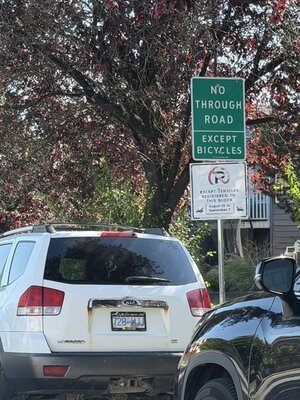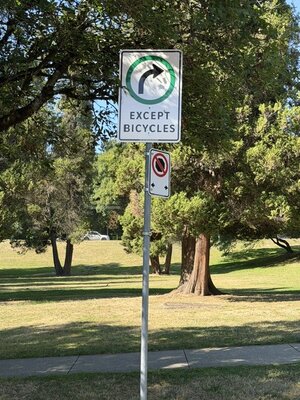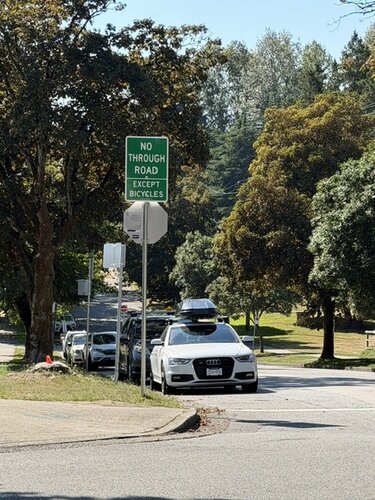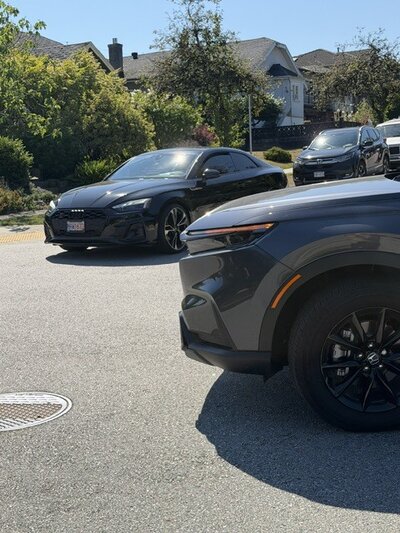
That was before the push for car-free housing - before the surge of displaced renters with no garages of their own, before the endless stop-and-go searching. There was once enough of the street to share. Now it’s a scramble for space.
It’s soon to be worse.
The West Broadway Conundrum
Vancouver’s latest push for car-free housing is a proposed 196-unit rental building at 365–395 West Broadway. Due to the site’s positioning between rapid transit lines, it was declared the perfect location to test the new transportation model - eliminating all underground parking for residents.
This will soon become a source of great frustration to commuters, who will now have to share the streets with these West Broadway renters - and find their already limited spaces claimed. The City of Vancouver reports that the West End has fewer than two on-street visitor slots for every 100 households; and, during busy periods, drivers can spend approximately 10 minutes searching for a space and travel almost 3 kilometres extra before finding one. Those numbers will grow significantly once the new units are complete.
When There Aren't Enough Parking Spaces in Vancouver
Capacity proves the crucial problem. A street has a fixed number of curb spaces. Once those spaces are occupied, another driver can't simply create an additional spot; they have to wait, circle the block, or travel farther away.
The consequences of this are measurable. Research involving 138 drivers in Brisbane found that 35% spent more than five minutes searching for on-street parking during their commutes, and even those who parked only occasionally in the central business district searched up to five minutes.
That time accumulates quickly. A driver who spends 10 minutes looking for parking on every weekday trip would earn approximately 42 hours per year in wasted searching (assuming 250 workdays); while, at 15 minutes per trip, that total rises to 62.5 hours—more than two and a half full days.
Parking searches also create additional vehicle travel. The City's West End statistics—measured at 10 minutes and nearly 3 kilometres of extra driving per individual—illustrate the problem particularly well. A driver making that search five days a week would travel roughly 750 additional kilometres per year for a standard work commute.
This is why parking capacity is a public issue, not simply a private inconvenience. When a development provides no resident parking, the remaining vehicles don't simply disappear. They compete for a limited pool of spaces—and the cost is time and patience.
Sources
City of Vancouver — West End Parking Strategy
Assemi, Baker & Paz (2020) — Searching for On-Street Parking
The Nature of On-Street Parking Search — Transportation Research Part B
City of Vancouver — Smarter Parking Research