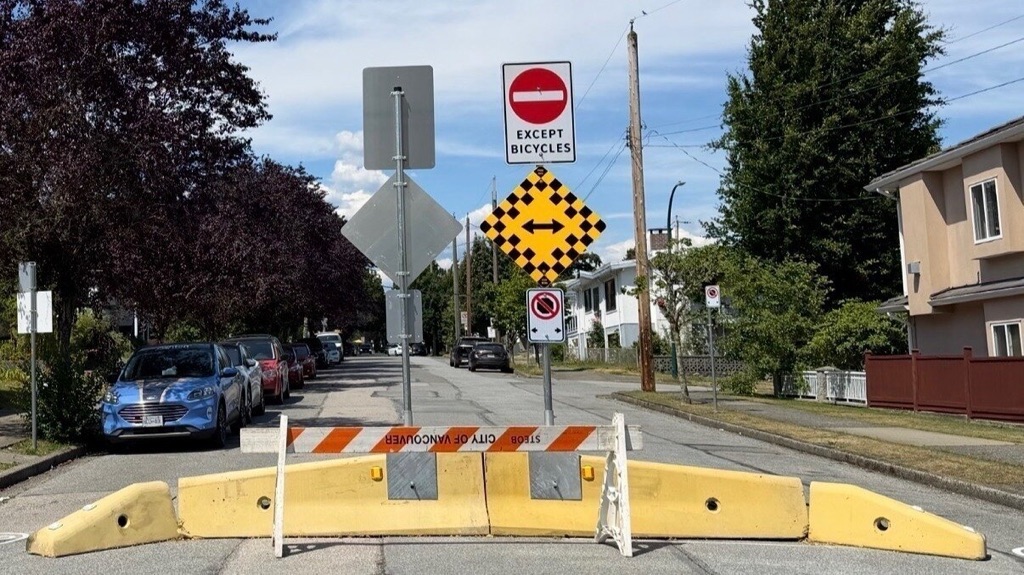
These counts come from the Remove the Barriers petition on Change.org. We read all 74 comments posted there as of 25 September 2026 and grouped them by what each person actually raised.
Most comments raise more than one concern, so these do not add up to 100 per cent. The categories are ours, not the commenters’. Someone else reading the same comments might group them differently, and every one of them is public, so you can go and judge for yourself.
There is more further down this page. Beyond the petition, neighbours have also written to us directly through this site, and residents have sent longer accounts of what changed on their street. Those are separate from the petition, and every one of them is published with that person’s permission.
Traffic pushed into back lanes and alleys
25 of 74 · 34%
Speeding, near misses and unsafe driving
25 of 74 · 34%
Longer trips, or trouble reaching their own home
19 of 74 · 26%
Traffic pushed onto other residential streets
17 of 74 · 23%
Emergency vehicle access
14 of 74 · 19%
A confusing layout, described as a maze
12 of 74 · 16%
Children’s safety, in lanes and on school routes
11 of 74 · 15%
Notice or consultation
11 of 74 · 15%
Speed bumps, enforcement or signals preferred instead
10 of 74 · 14%
Longer routes meaning more fuel and more emissions
7 of 74 · 9%
Waste of public money
5 of 74 · 7%
Seniors and mobility
4 of 74 · 5%
Impact on local businesses
4 of 74 · 5%
Loss of parking to the concrete blocks
1 of 74 · 1%
Opposed, without giving a specific reason
6 of 74 · 8%
The lanes are the story
About one in three comments describe the same thing: traffic that used to be on the street is now in the lane behind the house. People describe drivers speeding past while they take out garbage bins, children who can no longer play where they used to, and lanes that were quiet for decades now carrying commuter traffic.
This is the concern raised most often, level with speeding and unsafe driving, which is usually the same complaint seen from the lane. It is also the one that traffic modelling should have anticipated.
“At Woodland and 5th, cars unable to continue south instead zip up our back alley. I’m all for quieter streets, for more speed bumps and enforcement, but the unintended effect of these barriers is that traffic finds alternate routes, rather than making the area as a whole safer.”
Michael
“I took the garbage bins out early one morning and almost got hit by a white car whizzing up our alley.”
Josie
Several people describe the same escalation. A lane that carried a handful of vehicles a day now carries commuter traffic, and drivers who are already frustrated arrive at speed. Three comments describe residents being sworn at or confronted by drivers in their own lane.
School routes
Eleven comments raise children specifically, and some point to the routes children take to school. This is the same concern residents described in our recorded interviews, arrived at independently.
“Turner St between Windermere and Lillooet was a relatively quiet stretch, used by residents or their visitors. With the recent changes to neighbouring streets it has become the major route for a large number of commuters trying to avoid Hastings traffic.”
Maureen
This is not drivers against cyclists
It would be easy to read this as a dispute between people who drive and people who cycle. The comments do not support that.
One commenter who cycles to work objects on cycling grounds, describing being pushed to the edge of the roadway and then having to merge back into traffic. Another describes two riders whose wheels caught in the gap between the two halves of a speed bump, one of them badly scraped.
“I am a cycling commuter and a driver and I don’t think they are working for anyone. They force bikes over to the side and then you have to swerve out back into traffic, which is dangerous.”
Jennifer
The objection here is not to safer streets. It is to a design that several road users, on several kinds of vehicle, describe as making things worse.
What residents suggest instead
About one in seven comments propose a specific alternative, and they cluster tightly. Speed bumps. Enforcement of existing rules. Signals at the intersections that genuinely need them. Measures that slow traffic where it is rather than sending it somewhere else.
One notes that speed bumps already on part of their street are effective. Another points out that residents in neighbouring areas were told they would have to gather signatures and pay for speed bumps themselves.
The cost that is easy to miss
Seven comments make a point that deserves more attention than it usually gets: every detour is fuel burned. Residents describe trips that used to be direct now running around the block, and note that this sits awkwardly beside the City’s own emissions targets.
One raises parking: the concrete blocks occupy space that was previously used to park, and the writer can no longer park in front of their own home.
On consultation, the comments do not agree
We want to be accurate about this, because it is the point the City is most likely to contest.
The comments do not tell a single story. Some residents say the barricades appeared with no notice at all. One says the only notice received concerned the Adanac overpass. At least one commenter argues there was extensive engagement, that it is too early to judge, and that the City should be given time to gather data before anything is removed.
We are publishing that view alongside the others, because it is on the record and because a campaign that only quotes agreement is not worth reading.
What recurs across the rest is not a claim that no process existed. It is that the process did not change anything.
“I have participated in multiple community engagement opportunities, and it is clear that the city did not take residents’ needs into account.”
Melissa
“Minimal consultation cannot be mistaken for meaningful consultation.”
Varian
That is a harder criticism than an absence of consultation, and a fairer one. It can also be answered. If engagement was run, the City can publish what it heard, what it changed in response, and what it decided to proceed with anyway.
About these counts. We read the 74 comments posted on the petition page as of 25 September 2026 and grouped them by the concerns each one raised. Most raise several, so the percentages overlap and do not total 100. One comment was off-topic and is not counted in any category.
The categories are ours. Someone else reading the same comments might group them differently, and the underlying comments are public so you can read every one of them at the source and judge for yourself.
Excerpts are quoted briefly, with first names only as they appear publicly on the petition. We have not published surnames, addresses, or any detail beyond what the commenter chose to post. We have not reproduced comments that make claims we cannot verify, or that attribute motives to individuals who have had no chance to respond.
Read the full petition and all comments on Change.org
In their own words
These accounts were sent to us through the site by people who live here. Each one is published with that person’s permission, credited the way they asked to be credited. Nothing has been added.