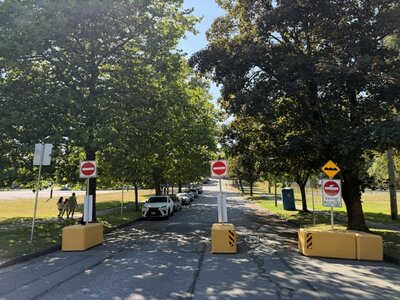
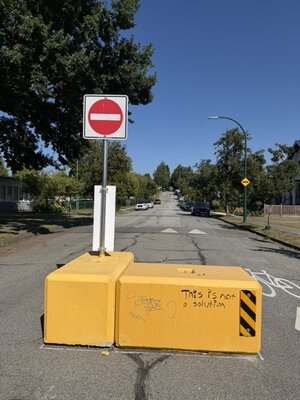
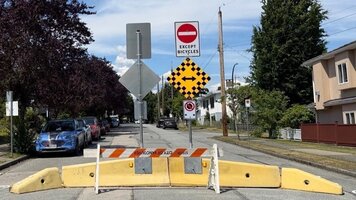
Traffic calming promises to transform the streets into something safe, something secure. When measures are improperly installed, however, it delivers nothing but storm water issues - and leaves those with disabilities struggling to navigate.
The stakes are significant: Statistics Canada reports that 10.6% of Canadians aged 15 and older—more than 3.1 million people—had a mobility disability in 2022. The implementation of curb extenders and raised crossings, therefore, must be precise. Without strategic placements and carefully supported infrastructure, these measures can create unsafe conditions for those with a physical restriction.
The U.S. Access Board specifically warns that some curb-ramp designs can increase ponding and debris accumulation, while drainage problems can prove common during installations and make accessible landings difficult to use. Its guidance recommends considering drainage impacts when installing curb ramps and, where necessary, adding catch basins or trench drains.
FHWA likewise says adequate drainage is necessary to prevent water and debris accumulating at the bottom of ramps because they can reduce surface slip resistance. The Access Board has also documented how gutter lips intended to control runoff can deflect wheelchair casters and potentially throw a wheelchair user forward. This concern is supported by a study of the Abuakwa–Bibiani Highway, which showed that poor drainage greatly undermined pavement condition and accessibility, accounting for 18% of total yearly damage.
For those with mobility issues, a puddle isn't merely an inconvenience. It's instead an obstacle - with poorly installed traffic calming measures leaving the sidewalks exposed to inclement conditions and uneven pavement.
Is safety meant only for those in cars?
Sources
Statistics Canada — Canadian Survey on Disability, 2022
U.S. Access Board — Public Rights-of-Way Accessibility Guidelines
FHWA — Signalized Intersections Accessibility Guidance
U.S. Access Board — PROWAAC Report
Frontiers — Highway Study
Traffic Calming Effects In East Vancouver
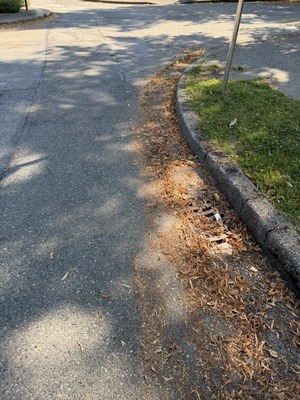
When Traffic Calming Creates a Water Barrier In East Vancouver