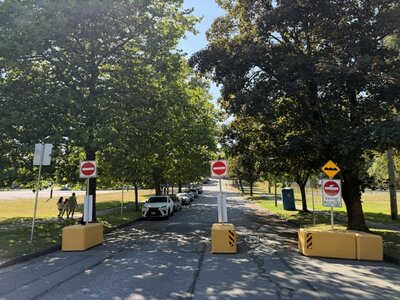
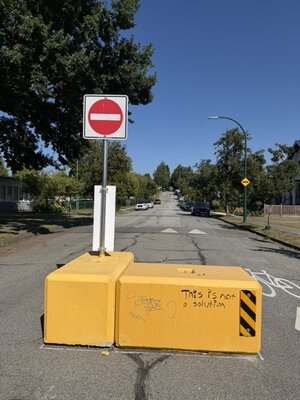
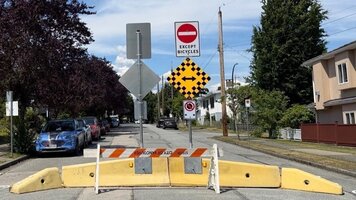
Traffic calming doesn't just redefine how vehicles move. Instead it responds to the forecast - trapping heavy rain on compromised streets and turning commutes into all-weather frustrations.
The Federal Highway Administration specifically notes that adding traffic calming measures can negatively influence roadway drainage. Its guidance says curb extensions demand strategic alterations, while chokers can require a relocation of catch basins, gutters, and other features. Without these proper precautions the street grade can change - and that matters when heavy rain arrives.
FHWA reports that 75% of weather-related vehicle crashes occur on wet pavement, while 47% happen during active rainfall. Even just 0.002 inches of water on pavement can reduce tire friction by up to 30%, leaving drivers vulnerable to under-steerage. When traffic calming measures are improperly installed, this creates potentially dangerous street conditions.
Standing water, for example, greatly undermines performance. The FHWA reports that ponding at intersections can require vehicles to travel farther to stop (impacting reaction times), while slick pavement can cause hydroplaning at speeds as low as 35 mph. The addition of curb extenders and similar measures leaves drivers exposed to inclement conditions.
There's no umbrella big enough to stop this downpour.
Sources
FHWA — Traffic Calming ePrimer, Module 3: confirms that traffic-calming measures can affect drainage; curb extensions and chokers may require drainage modifications.
FHWA — Rain & Flooding: 75% of weather-related crashes occur on wet pavement; 47% occur during rainfall; wet pavement reduces arterial speeds by 10–25%.
FHWA — Driver, Vehicle and Roadway Characteristics in Wet Weather: 0.002 inches of water can reduce tire-pavement friction by 20–30%; drainage problems can produce water on the pavement.
FHWA — How Storm Runoff Affects Roadway Safety: standing water and ponding can increase stopping distances; hydroplaning can occur at speeds as low as 35 mph
Traffic Calming Effects In East Vancouver
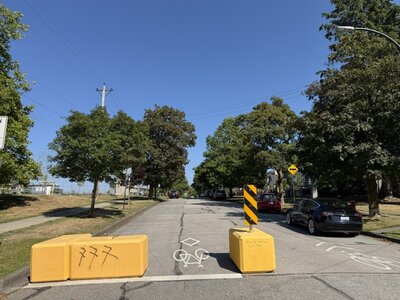
Standing Water, Narrow Streets: Traffic Calming In East Vancouver