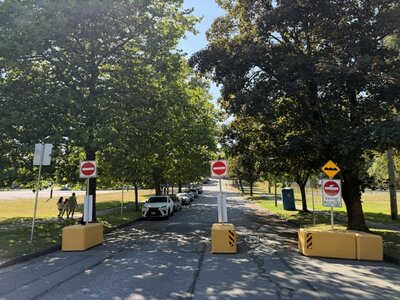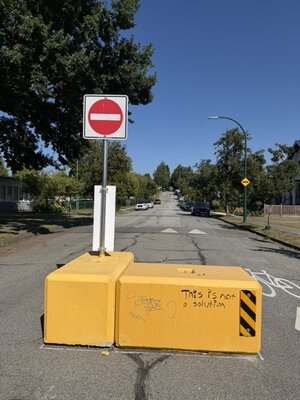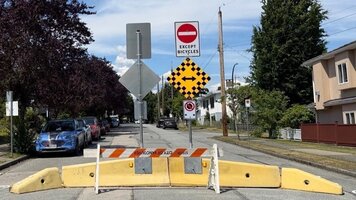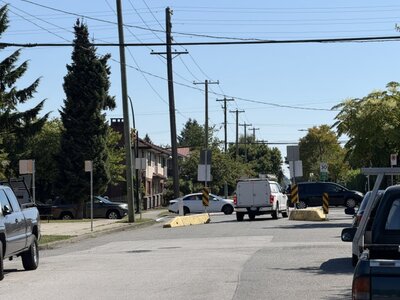
As the concrete starts expanding, however, the shape of the street begins to change; and that inconvenience suddenly becomes a massive complication for commercial vehicles, creating a network of lost parking and denied access.
A 2026 Philadelphia study of 94 intersections found that the typical curb extension is approximately 45 feet long and projects up to 11 feet into the roadway — roughly the size of two parking spaces at the corner. When this traffic calming measure is used repeatedly (often to reduce speeds and eliminate long crossing distances), it leaves commercial trucks and vans struggling to navigate. Routes are narrowed; parking is lost; and trying to access stores proves challenging.
A Seattle freight study demonstrates this challenge. It found that commercial vehicles spend an average of 9 minutes searching for on-street parking when faced with excessive traffic calming measures, and it was later discovered that illegal parking occurred in 45% of short-term delivery scenarios (simply because few legitimate spaces were available). As curbs are lengthened for bike lanes and other uses, finding a convenient place to stop can become difficult - and this translates to lost time and undermined schedules.
It also creates a high-stress environment. The same Seattle study revealed that commercial drivers experienced 8.82 stress peaks per minute on roads with a bike lane versus 7.72 without one (a 14% increase). Weaving through curb extensions and re-routed roads raises the chance for distracted driving.
Where, precisely, is the advantage?
Sources
- Guerra, Hu & Ben-Amos — The Effects of Curb Extensions on Traffic Crashes and Injuries
- McCoy, Poirier & Chapple — Bikes or Bust?
- Springer — Urban Freight Integration with Protected Bike Lanes