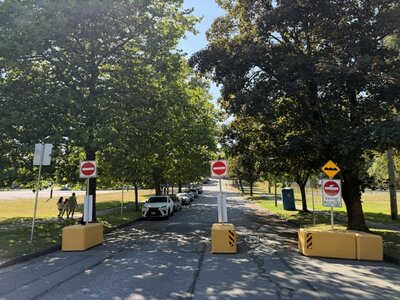
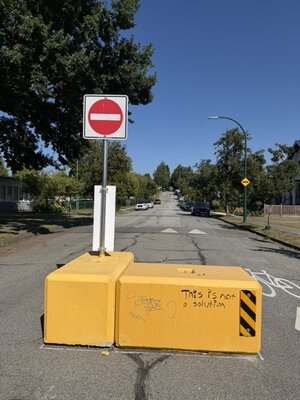
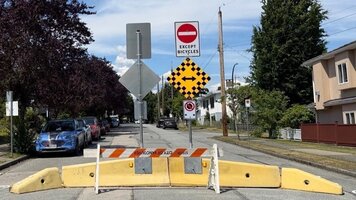
Vancouver's Vision Zero strategy aims to make streets safer. With the unveiling of its proposed traffic calming measures, however, a question looms: how do those who already face accessibility barriers adapt to full-closure changes?
The scale of the accessibility challenge is substantial. Statistics Canada found that 56% of Canadians with disabilities—approximately 4.5 million people—experienced at least one barrier in public spaces in 2022. Interrupted sidewalk networks impacted 26%, while 8.9% of incidents involved pedestrian signals at intersections or crosswalks. Most staggering, however, was the 80.5% of individuals who reported traffic-related challenges, with accessibility often proving a struggle.
The introduction of traffic-calming, therefore, may undo the good intentions of the Vision Zero project. A full closure can force an accessible vehicle to approach from another direction; a diverter can change access to a familiar drop-off point; and an expanded bicycle path may consume precious curb space. That matters for services such as HandyDART, which reported 1.76 million trip requests in 2025 (up 10% from 2024). Navigating complicated route changes leaves those with disabilities in a vulnerable position, forcing extended travel times and potentially limiting crucial infrastructure.
The hope for safer streets must not overwhelm the need for accessibility.
Sources
Statistics Canada — Barriers to Accessibility in Public Spaces: Findings from the 2022 Canadian Survey on Disability
Statistics Canada — Barriers to Accessibility in Canada: Public Spaces, 2022
Statistics Canada — The disability rate in Canada increased in 2022
TransLink — Managing the Transit Network / 2025 HandyDART Service Performance Review
Traffic Calming Effects In East Vancouver
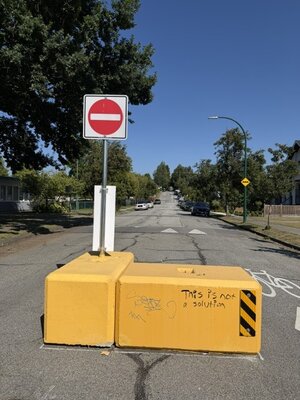
Vision Zero and Disability: When Traffic Calming Creates New Barriers