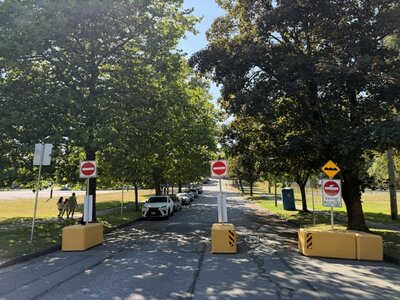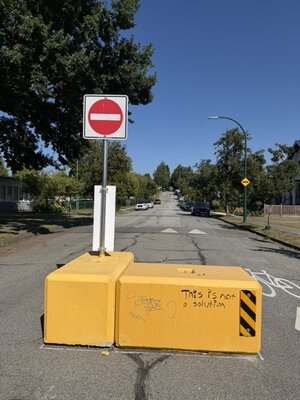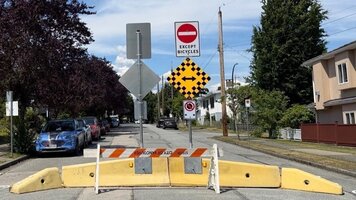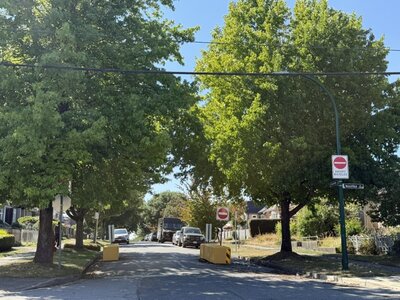
Traffic calming extends far beyond the barricade. For Vancouver's caregivers each blocked street can turn a short trip into a far more complicated journey.
The potential scale is substantial. In 2022 Statistics Canada reported that 42% of Canadians aged 15 and older—approximately 13.4 million people—provided unpaid care to individuals affected by disabilities (whether physical, mental, or emotional); and 70.5% of those caregivers were responsible for transporting their charges. Traffic calming measures, therefore, can have considerable effects on their daily routines.
For a caregiver, the transportation process is more complicated than finding the correct address. Close access to an entrance, unimpeded curbs, and available parking spaces is instead needed - with those suffering from disabilities requiring direct routes to ensure maximum comfort and convenience. A full closure undermines this, demanding a longer approach, fewer (safe) drop-off locations, and additional distance between the vehicle and the destination.
The burden can also accumulate. A caregiver forced to endure four additional kilometres per day because of changed routes would travel roughly 1,460 extra kilometres per year; and, when the average amount of time spent tending to their charges is already eight hours a week (per Statistics Canada), that small detour repeated hundreds of times becomes a massive concern.
Traffic calming leaves routes interrupted - and accessibility undermined.
Sources
Statistics Canada — Canadian Survey on Disability, 2022
City of Vancouver — Accessibility Strategy
City of Vancouver — Walking and Accessibility
City of Vancouver — Accessibility Committee