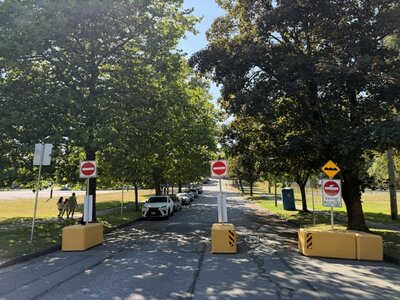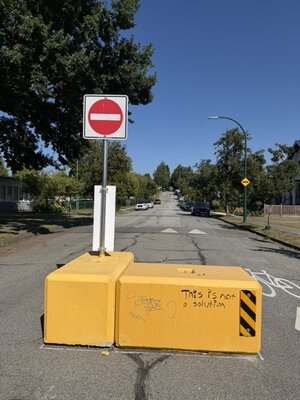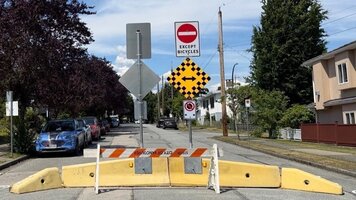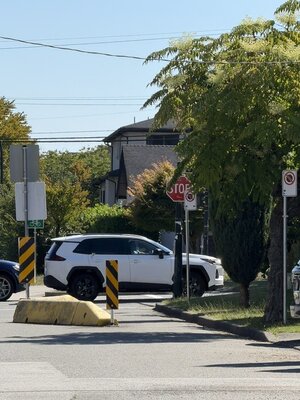
Instead it leaves drivers overwhelmed... and much more likely to sound the horn.
When Traffic Delays Become Frustrations in East Vancouver
Funneling vehicles onto smaller side-streets (forcing them from their familiar routes and requiring them to instead find alternative ways to navigate) proves less than ideal in East Vancouver. A 2004 observational study examined 7,200 drivers across six locations, wanting to explore the relationship between congestion and aggressive behavior. Researchers recorded more than 2,000 negative responses, including honking, lane cutting, and passing on shoulders. They also found that, after accounting for the number of vehicles present, high-risk driving was more likely to occur during rush periods when commuters placed a greater value on their travel time.
Another study involving 183 drivers further supports this, finding that lower speeds and longer vehicle platoons generally produced greater reported frustration - with drivers more likely to express their negative feelings through honking and similar behaviors. Forcing cars onto too-narrow streets promises increased congestion and endless aggravation, leading to a rise in aggressive responses. This behavior leaves residents vulnerable to an excess of noise pollution and potential road rage incidents.
Is this safety - or is it senseless?
Sources
Shinar & Compton — Aggressive Driving: An Observational Study of Driver, Vehicle, and Situational Variables
Kinnear et al. — An Experimental Study of Factors Associated With Driver Frustration and Overtaking Intentions
City of Vancouver — Traffic Calming and Safety