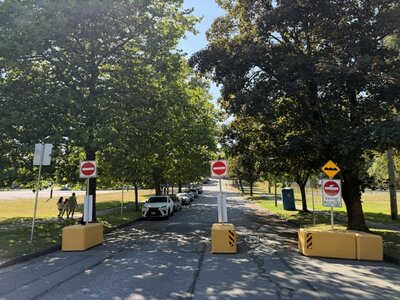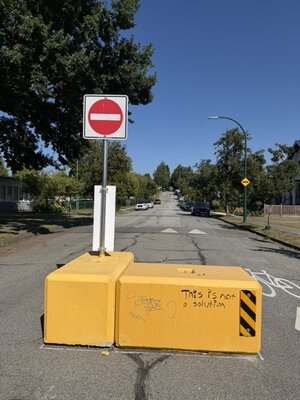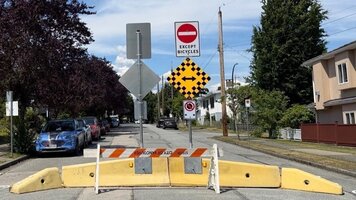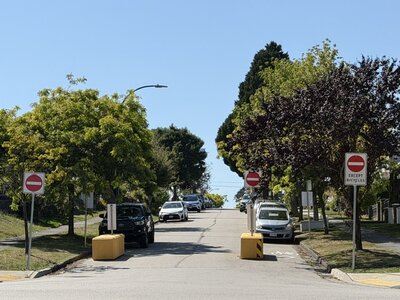
It ends where an accessible vehicle can safely stop, where a wheelchair ramp can be deployed, where a curb cut connects the sidewalk to the street, or where parking is actually available. Adaptable infrastructure is essential for every day, and the sudden arrival of full-closure measures can greatly impact the ability to travel.
For residents with disabilities, the difference between a direct route and a series of detours is far more consequential than it is for able-bodied drivers; and the scale of the issue is significant. The City of Vancouver says more than one in five residents lives with a lifelong debilitating condition, while its building-accessibility guidance estimates that more than 5% of residents have a physical limitation or mobility restriction.
The cost of traffic calming, therefore, may be too high to pay.
Traffic Calming Effects in East Vancouver
For an able-bodied driver, a blocked intersection may require a few simple turns and some additional minutes (an inconvenience but not a substantial disruption). For those with disabilities, however, the accessibility of the alternative route proves essential - and depends on whether usable curb ramps, smooth surfaces, unobstructed sidewalks, and appropriate crossings are available. Vancouver specifically identifies these elements as important components of a street network. A diverter or full closure can, therefore, change more than traffic flow: it can redefine how drivers interact with infrastructure.
The issue extends to support services as well. HandyDART, part of TransLink's accessibility network, delivered 1,338,600 trips in 2025 to 32,600 registered customers. The sudden arrival of full-closure measures can greatly impact the door-to-door promise of this network, undermining schedules and forcing constant detours. Restricting access interferes with emergency care.
Turning streets into a series of detours and diversions has a far greater impact than inconvenience. It instead can limit accessibility.
Sources
City of Vancouver — Accessibility Strategy
City of Vancouver — Building for Accessibility
City of Vancouver — Walking and Accessibility
City of Vancouver — Accessibility Barriers
TransLink — 2025 HandyDART Service Performance