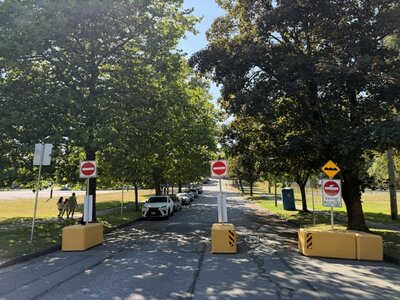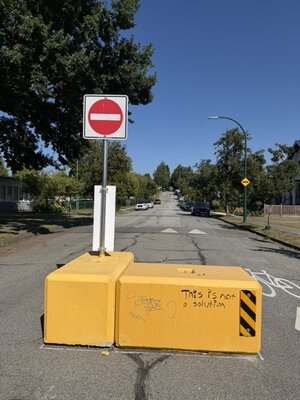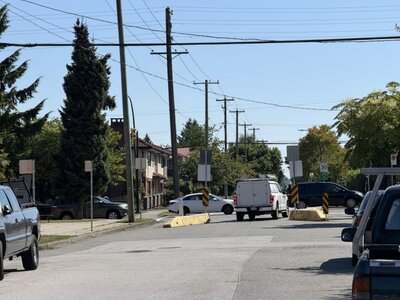
There is another side to the equation, however. When a full closure forces drivers onto longer routes, vehicles may travel farther to reach the same destination; and, when speed humps, chicanes or other treatments produce repeated braking and acceleration, emissions can rise. This can create a chain reaction that greatly undermines the desire for a greener future.
Traffic Calming in East Vancouver: Fewer Cars Here, More Kilometres There?
The Federal Highway Administration has found that traffic-calming measures can reduce vehicle volumes. Data from 187 speed-hump installations, for example, showed an average decrease of approximately 20%. However, a car disappearing from one route does not necessarily mean that the effects of the trip—and its associated emissions—have disappeared as well.
Research instead shows that full-closure methods can extract a heavy toll. A 2009 field study of diversion measures in Northern Virginia found that aggressive acceleration following traffic-calming devices could drastically increase fuel consumption and emissions. Additionally, a 2015 simulation study of a dense urban neighbourhood saw a rise in nitrogen-oxide ratings from 5% to 160%, depending on the treatment and conditions.
The broader lesson is that speed, acceleration, traffic volume and route length all matter. A quieter street may be a safer street - but, if the environmental goal is to reduce driving-related pollution, the question should extend beyond the barricade: did the project actually eliminate vehicle travel... or did it simply send the same trips the long way around?
We think we know the answer.
Sources
City of Vancouver — Traffic calming and safety. Vancouver's description of its traffic-calming program and objectives. City of Vancouver — Traffic calming and safety
FHWA — Effects of Traffic Calming Measures on Motor Vehicle Speed and Volume.
Speed humps and speed tables: Externalities on vehicle speed, pollutant emissions and fuel consumption (2020).
Simulating the air quality impacts of traffic calming schemes in a dense urban neighborhood (2015).
.png)