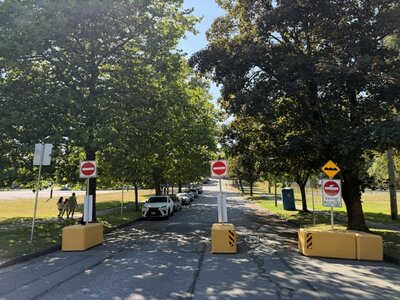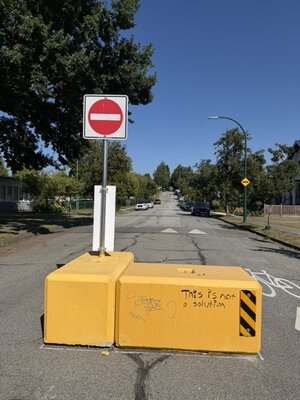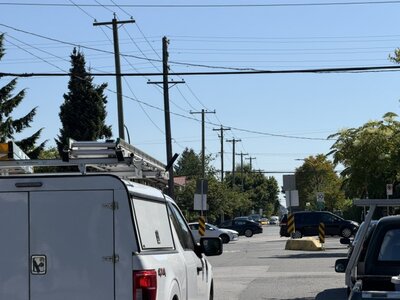
East Vancouver businesses don't have the luxury of wasting time. They instead have schedules to maintain and carefully choreographed deliveries to receive - and even a single delay can spiral into a lost afternoon.
Full closure traffic calming, therefore, proves all too frustrating.
The Effect of Traffic Calming on East Vancouver Deliveries
The Federal Highway Administration (FHWA) notes traffic calming impacts long-wheelbase vehicles (such as trucks and cargo vans) far more than passenger cars. Commercial drivers must navigate new routes, trying to accommodate turning radii, body dimensions, and clearance ratios - all while experiencing delayed travel times. The inclusion of diversion measures, such as speedbumps and full-closure barriers, can stall a vehicle by up to 10 seconds per obstacle; and this accumulates quickly over the course of the day, resulting in noticeable delays.
Travel time is only one part of the equation, however. The University of Washington's Urban Freight Lab has emphasized the importance of the “final 50 feet” of a delivery—the portion between the vehicle and the customer's actual receiving location. According to their research, this segment accounts for approximately 25% to 50% of transportation supply-chain costs. It includes finding a legal and practical place to stop, accessing loading areas, moving packages from the truck, and reaching the customer. Traffic calming measures that make direct access more difficult can, therefore, affect a disproportionately expensive part of the process: separating drivers from their intended destinations.The problem becomes even more significant when traffic calming changes established routes. Research into last-mile freight has found that recurring congestion can force companies to overextend promised delivery times, reducing the productivity of drivers and vehicles alike. Schedules cannot be maintained.
Traffic calming emphasizes safety - but often neglects everyday practicality. Deliveries in East Vancouver will be consistently undermined.... and so will profits.
Sources
Federal Highway Administration (FHWA), Traffic Calming ePrimer. Provides guidance on speed humps, traffic diversion, emergency access, vehicle characteristics and the broader effects of traffic-calming measures. FHWA Traffic Calming ePrimer
Federal Highway Administration (FHWA), Traffic Calming: State of the Practice. Includes traffic-volume data from hundreds of traffic-calming installations and research concerning vehicle impacts and traffic diversion. FHWA Traffic Calming: State of the Practice
University of Washington, Urban Freight Lab. Research on urban freight logistics and the “final 50 feet” of the delivery process, including its substantial share of total supply-chain costs. University of Washington Urban Freight Lab
Last-mile freight disruption research. Studies examining delivery impacts from congestion, road closures and restricted access in Boston, Bogotá and Pamplona provide evidence concerning changes in route distance and travel time.
.png)