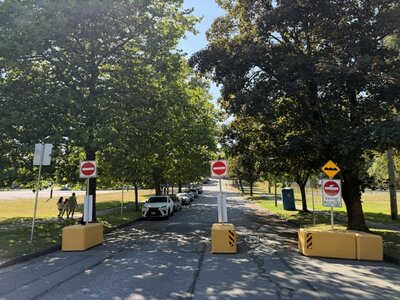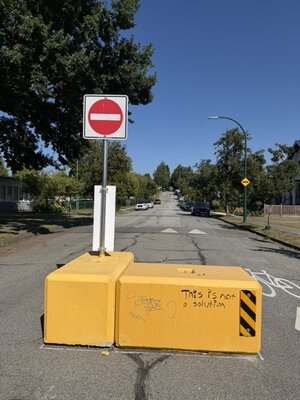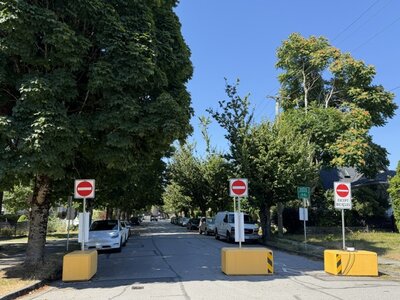
It can also prove entirely avoidable.
The Traffic Calming Issue in East Vancouver
Traffic calming - a management strategy meant to reduce both vehicle volumes and speeds - is intended to provide safer streets. However, when implemented poorly, its use of full closure barriers and curb limiters can undermine the efforts of emergency responders, forcing them to find new routes and costing precious time.According to the Federal Highway Administration (FHWA), the impact of traffic calming is not theoretical. It’s instead proven and potentially devastating. After conducting intensive field studies to measure vehicle responses to traffic calming devices, the organization found reaction times were greatly affected. For example, ambulances experienced an average delay of approximately 3.8 seconds at speed humps; while fire trucks earned losses of up to 10 seconds per barrier.
This can cause a frightening chain reaction - with each new obstacle adding additional time and culminating in several lost minutes.
Full Closure Traffic Calming in East Vancouver: The First Responder Impact
Full closure traffic calming doesn't merely slow an emergency vehicle. It instead removes the original - more direct - route.The FHWA urges severe caution with this measure, rating it as inappropriate for major thoroughfares. An emergency crew approaching a blocked street has to navigate new obstaclesL negotiating additional intersections, locating available routes, and then approaching the destination from an entirely different direction. Time is wasted and the resulting delay can undermine the quality of care for patients. It is potentially dangerous - and entirely avoidable.
A full closure measure is as irresponsible as it is unnecessary.
Sources
FHWA Traffic Calming ePrimer — Full Closure
FHWA Traffic Calming ePrimer — Emergency Services
FHWA Traffic Calming: State of the Practice
.png)