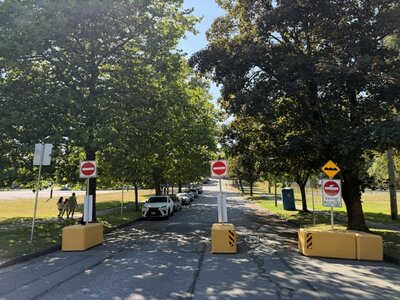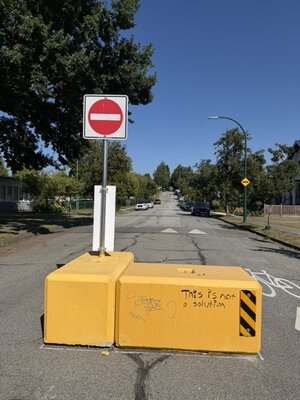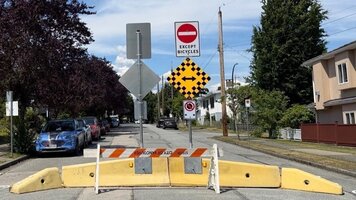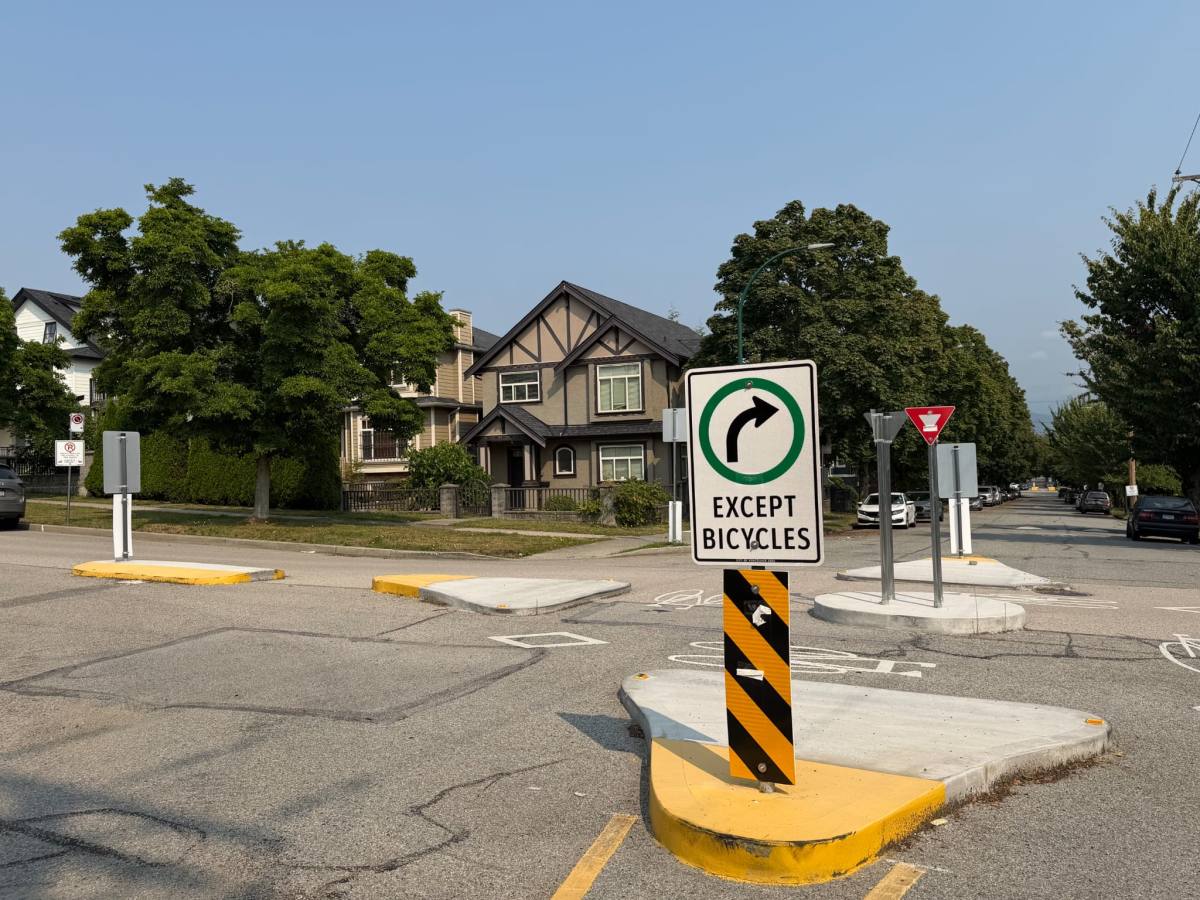
Twenty-two years ago, residents in our part of East Vancouver told the City that traffic-calming measures were interfering with emergency vehicles reaching their homes.
The City wrote it down. The record is public. It is worth reading, because it tells you something about how this process works.
The report
In July 2004, City staff produced an administrative report titled 1900 Pender Street Traffic Calming Plan – Follow-Up, authored by Fred Lin, P.Eng., of the Neighbourhood Transportation Branch. It carried reference number RTS 04333 and went to the Transportation and Traffic Committee on September 14, 2004.
The report was a follow-up on a traffic-calming plan that had been installed on a trial basis. Part of it surveyed residents about how the changes were working.
What residents said
In Appendix C of that report — the section reproducing residents' survey comments — two accounts appear.
One resident described an ambulance having difficulty entering the 2000 block of Ferndale Street. According to the account, emergency personnel parked at Ferndale and Semlin and went the rest of the way on foot, carrying first-aid equipment.
The same resident described a Vancouver Fire rescue vehicle responding to a report of chest pains at 2164 East Pender. The account states the vehicle could not make the eastbound turn onto East Pender because of its size, and instead travelled north on Victoria, east on Hastings, south on Templeton, and back around to the 2100 block of East Pender.
These are resident reports, recorded in a City document. They are not findings that City engineering staff independently verified, and we are not going to present them as such. That distinction matters, and anyone who tells you otherwise is doing the argument a disservice.
But they were serious enough that the Committee discussed emergency services when the report came forward.
What the City did
The Transportation and Traffic Committee considered the report, including questions about input from fire and ambulance services in the proposed designs.
The Committee then unanimously recommended that the traffic-calming measures be retained permanently. Council approved that recommendation.
Why this is worth knowing in 2026
Read that sequence again, because it is the pattern residents describe today.
Residents raised a specific, serious concern about emergency access. The concern was formally recorded in a City report. It was discussed at committee. And the measures were made permanent.
We are not saying the decision was wrong. We were not in the room, the report contains more than these two accounts, and reasonable people weighed it.
What we are saying is that being heard and being answered are different things. A concern can be documented, discussed, and then simply not addressed in the outcome. If that is what happened in 2004, residents in 2026 are entitled to ask what has changed about how these decisions are made.
The question we are asking now
Twelve years after that report, the City wrote in its own 2017 budget that fire response times were increasing due in part to traffic-calming initiatives. So the concern residents raised on Ferndale Street in 2004 turned out to describe a real mechanism.
Which brings us to a straightforward request:
For every traffic-calming project installed in our area since 2020, what emergency access assessment was done, what did emergency services say, and where is that written down?
If those assessments exist and are sound, publishing them settles the question and we will say so. If they do not exist, that is something residents should know.
Sources
- City of Vancouver, Administrative Report, 1900 Pender Street Traffic Calming Plan – Follow-Up, July 17, 2004. Author: Fred Lin, P.Eng., Neighbourhood Transportation Branch. RTS No. 04333, CC File No. 5757. Emergency-vehicle accounts appear in Appendix C (resident survey comments).
- City of Vancouver, Transportation and Traffic Committee minutes, September 14, 2004.
- City of Vancouver, 2017 Budget, Part II: Department Service Plans, page 176.