City Watch Live
Introducing City-Watch
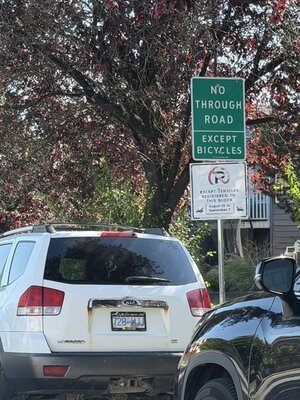
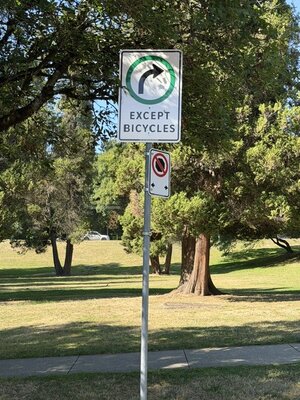
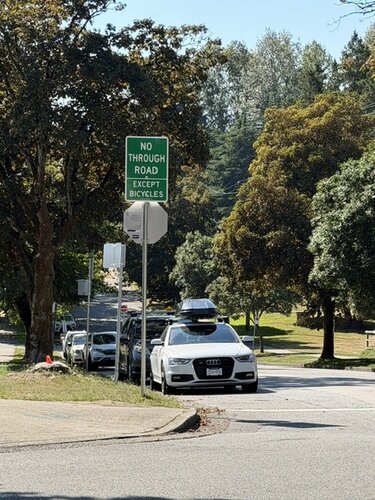
The barrier at the end of your block went in on a Tuesday. Somewhere before that there was a staff report, a consultation window, and a council vote. Maybe you caught wind of it. More likely you found out the way most people find out, which is by driving into it on the way to work and wondering when exactly that happened.
That gap, between when a decision gets made and when the people living with it hear about it, is what City-Watch is for.
City-Watch is the news and issues section of Remove The Barriers. We're using it to follow what's actually happening to streets like ours, here in East Vancouver and in other cities where the same arguments are being run, and to put all of it somewhere residents can find without knowing which agenda item to search for.
Two ground rules, because they matter more than any mission statement.
We link our sources, every time. If we cite a number you'll be able to click through and see who produced it. If we don't have a number, we'll say so instead of reaching for one that sounds about right. That isn't modesty. This site is going to be read by people who would like very much to dismiss it, and a single unsourced statistic is the cheapest way to hand them the excuse.
And we'll publish the parts that don't help us. Rulings get appealed, studies get contradicted, and sometimes the thing everyone repeated turns out to be wrong. If we tell you about a win and it comes apart six months later, you'll read that here too.
Why any of this is worth watching
Because the argument about our street isn't really about our street.
Traffic calming, slow streets, modal filters, complete streets. The vocabulary turns up in Vancouver and Toronto and Calgary almost word for word, usually attached to the same handful of consulting reports. Underneath the language sit ordinary and fairly consequential decisions. Who can still get down this road. Whose drive gets eight minutes longer. Which shops lose the customers who used to pass by. Which side street quietly absorbs the traffic that got pushed off the main one.
Cities are allowed to make those calls. What residents are owed is a straight answer about the trade-offs, the evidence behind them, and what happens when the evidence doesn't hold.
Two stories sitting on our desk right now show what we mean.
Ontario's top court draws a line
On August 14, the Court of Appeal for Ontario released its decision in Cycle Toronto v. Ontario, and it's probably the most significant Canadian ruling on street policy in years.
The background is worth having straight. Ontario's 2024 legislation, the Reducing Gridlock, Saving You Time Act, directed the removal of roughly 19 kilometres of protected bike lanes on Bloor Street, Yonge Street and University Avenue in Toronto. Cycle Toronto and two individual cyclists took it to court. In July 2025, Superior Court Justice Paul Schabas sided with them, finding that pulling the lanes out would raise the risk of injury and death and therefore engaged section 7 of the Charter, the right to life, liberty and security of the person.
The appeal court reversed him, unanimously, and not quietly. The three judges held there is no Charter right to bicycle lanes, said the lower court had wandered out of law and into policy, and noted that governments aren't constitutionally obliged to follow the advice of their own experts.
We're going to unpack that properly in a longer piece, because it's being oversimplified in both directions and neither version is quite right. The court did not find that removing bike lanes eases congestion. It went out of its way to say that question is none of its business. What it found is narrower, and honestly more useful to people like us: how a road gets configured is a political question, settled by elected people who answer to voters, not a constitutional one settled by judges.
If our streets are a political question, then the people making these decisions are answerable to the residents living on them. That has been this campaign's argument from the beginning.
The other half, reported honestly: Cycle Toronto has signalled it may seek leave to appeal to the Supreme Court of Canada. This isn't over.
The e-scooter question nobody wants to touch
On August 4 a BC Highway Patrol officer stopped a 12-year-old riding an e-scooter through heavy traffic on Marine Drive at Pemberton Avenue in North Vancouver. His father got a $109 ticket. It wasn't the first North Shore parent ticketed over a child on an e-scooter this summer, and it wasn't close to the most serious incident.
The Canadian Paediatric Society doesn't hedge on this one. Children under 16 shouldn't be operating e-scooters or e-bikes, or riding as passengers on them. The devices accelerate hard and run at 30 to 50 km/h, and the injuries turning up in children's hospitals are head injuries, broken bones and cuts.
Meanwhile we're redesigning streets around shared and protected lanes, and the number of motorized devices moving through those lanes is climbing quickly. Those two facts belong in one conversation. At the moment they're being held in separate rooms.
That post goes up next.
Joining in
Our community is growing and so is the momentum. Over the next few weeks we'll be adding resources, updates, community stories and practical information to help residents understand what's happening on our streets and what can be done about it.
If you've watched something go wrong on a redesigned stretch of road, sat through a consultation that felt like a formality, or asked the city a question and got an answer worth reading, we want to hear about it. Records get built out of what residents actually see.
These are our streets. We should have a say in what happens to them.
Join the community